Chemical Moss Treatment vs Manual Scraping: Which Is Better?
Faced with a mossy roof, people tend to picture one of two solutions. Either someone climbs up and scrapes the green stuff off by hand, or the roof is sprayed with something that makes the moss die back on its own. Both approaches are real, both are used, and they work in completely different ways. Understanding that difference is the key to choosing well, and to avoiding a common mistake that leaves tiles worse off.
This guide compares chemical moss treatment with manual scraping, looks honestly at the strengths and weaknesses of each, and explains why the most durable results usually come from combining the right elements of both.
How Manual Scraping Works
Manual scraping is exactly what it sounds like: physically removing moss from the tiles using hand tools, brushes, or scrapers. Its appeal is immediacy. The moss comes off there and then, and the roof looks visibly cleaner the same day.
That immediacy is also its weakness. Scraping relies on force applied directly to the tile surface, and that force does not distinguish between the moss and the protective coating beneath it. Aggressive scraping can strip that coating, scratch the tile, and leave the surface rougher and more porous, which then holds more water and grows moss back faster. On older or already-weathered tiles, scraping can dislodge fragments of the surface or even crack tiles that have been softened by long-term damp.
Scraping also does nothing about the future. It removes what is visible but leaves the spores and the underlying dampness untouched, so regrowth begins again almost immediately. And because it usually means someone working directly on a slippery, mossy roof, it carries a real safety risk.
How Chemical Treatment Works
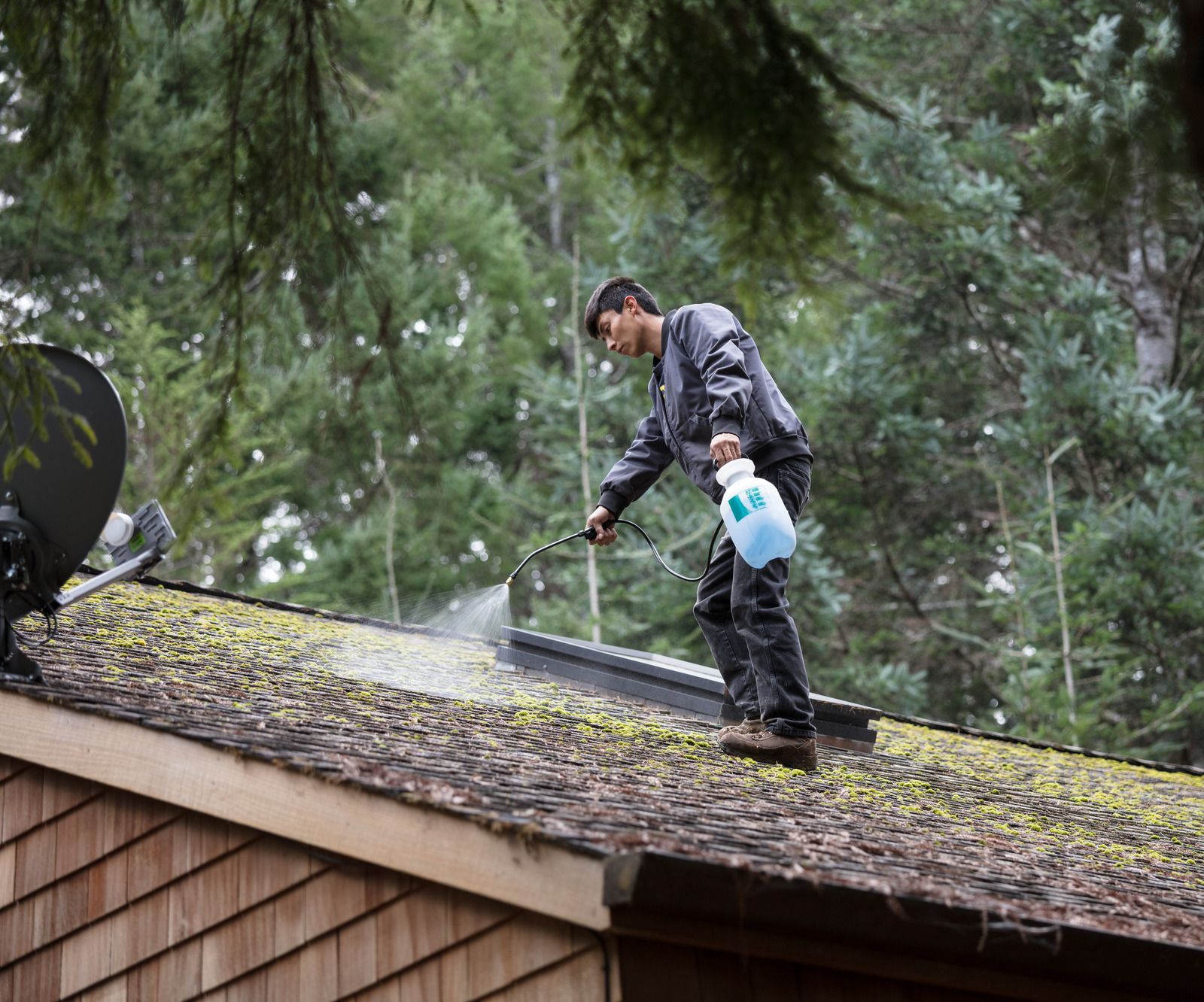
Chemical treatment uses a biocide, a product designed to kill moss, algae, and lichen. Applied to the roof, it works into the growth and kills it over the following days and weeks. As the moss dies it loosens and, over time, weathers away with wind and rain, while the treatment continues to make the surface less hospitable to new growth.
The strength of this approach is what happens after application. A biocide keeps working on the surface for months, slowing the return of moss and buying the roof a much longer clear period than physical removal alone. A non-toxic biocide can also be chosen to be safe around landscaping and property, avoiding the collateral harm of harsher chemicals.
The trade-off is patience. Chemical treatment is not instant; the moss dies and clears gradually rather than vanishing on the day. For a heavily mossed roof, treatment alone can leave dead growth in place for some time before it fully weathers off, which is why treatment is often paired with gentle removal rather than used entirely on its own.
Tip:Beware of anyone offering to scrape a roof completely clean in an afternoon with no follow-up treatment. A spotless roof today with nothing done to slow regrowth often means a green roof again within a year or two, plus whatever surface damage the scraping caused. Ask what happens after the moss comes off, not just how fast it comes off.
Why the Best Approach Combines Both Ideas
The sensible resolution is not to pick one method and reject the other, but to take the best of each while avoiding their worst. That means removing the bulk of the moss gently, without harsh scraping, and then applying a biocide to deal with what remains and to protect the surface going forward.
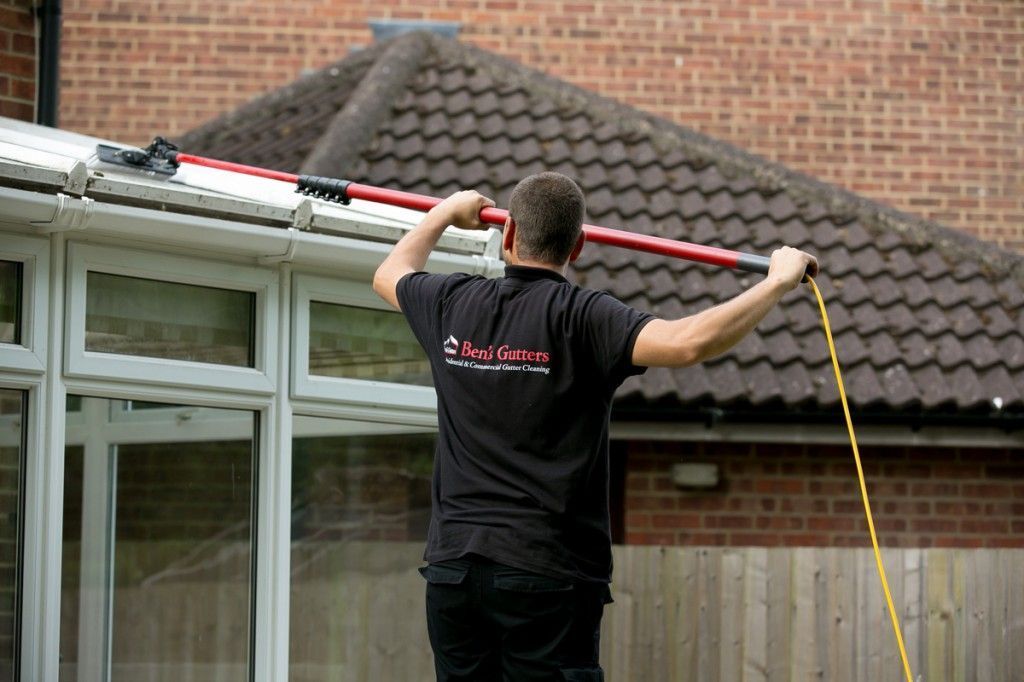
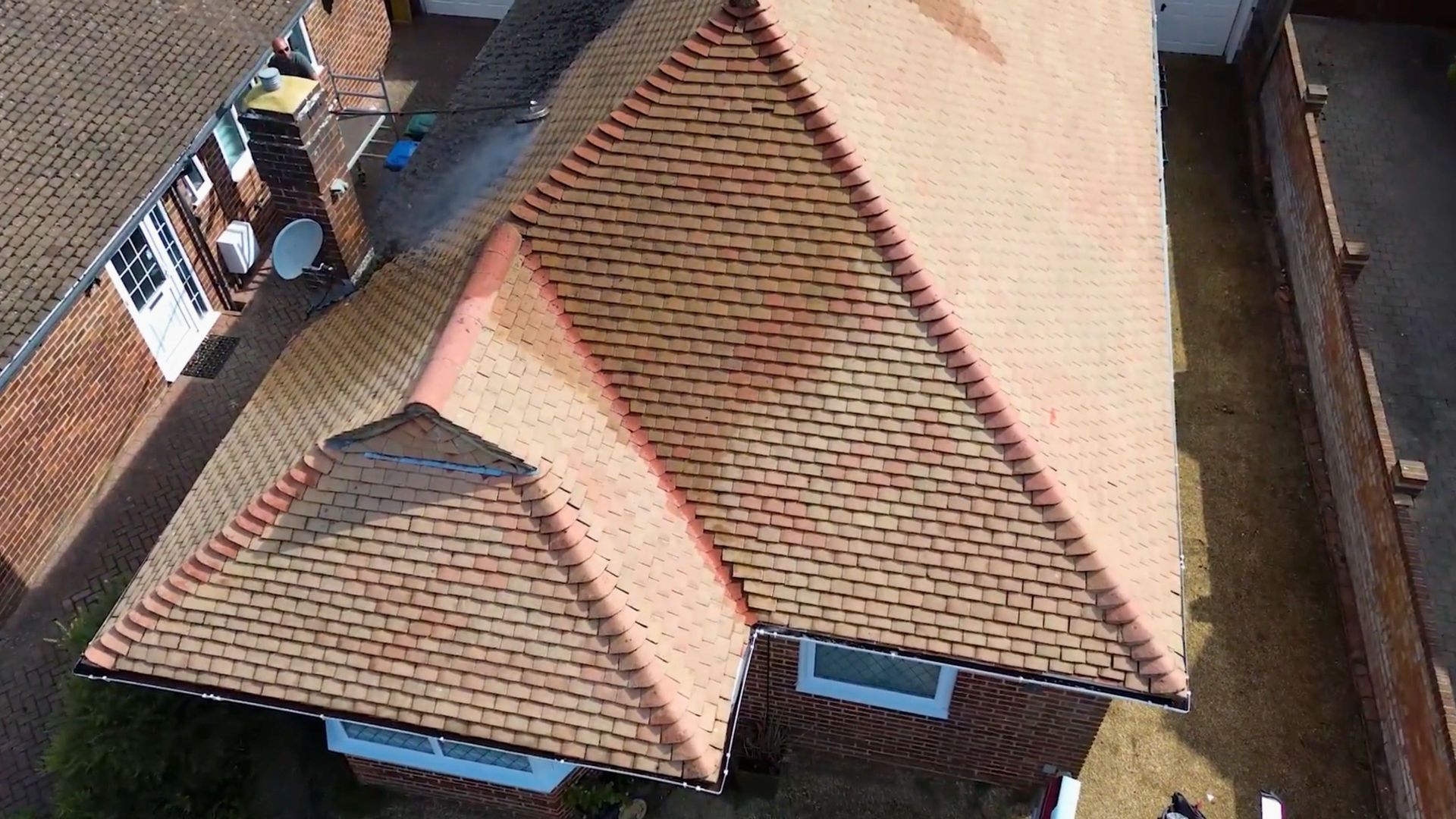
In practice this looks like a no-contact, water-based clean that lifts the growth from mobile scaffold towers or ground level, avoiding both the surface damage of scraping and the danger of working on the tiles, followed by a non-toxic biocide that keeps working for months afterwards. The gentle removal gives an immediate improvement without wrecking the tile surface, and the treatment gives the lasting protection that removal alone lacks. A
Roof Cleaning done this way is the practical middle path between the instant-but-damaging scrape and the gentle-but-slow chemical-only route.
What About Lichen and Stubborn Growth?
The combination approach matters most with stubborn growth like lichen, which anchors deep into the tile surface. Scraping lichen tends to take tile surface with it and still leaves the anchor points behind, from which it regrows. A biocide is far better suited to lichen because it keeps breaking down the residual growth over time. This is a clear case where chemical treatment succeeds precisely where scraping fails, and where patience beats force.
Keeping the roofline clear supports whichever approach is used, because debris feeds regrowth at the edges. Pairing roof work with
Gutter Cleaning removes organic matter that would otherwise help moss and lichen re-establish.
Making the Decision
If you remember one thing, let it be this: the goal is a roof that is clean now and stays clean, achieved without damaging the tiles. Manual scraping alone struggles on all three counts, damaging the surface, ignoring the future, and endangering whoever does it. Chemical treatment alone is gentle and lasting but slow. The combination, gentle removal plus biocide, hits all three: an immediate result, no surface damage, and lasting protection.
An inspection and patch test at the start confirm the tile type and condition and guide how much removal versus treatment a particular roof needs. In our 15 years on Sussex roofs, the roofs that stay clean longest are the ones cleaned gently and then treated, never the ones scraped bare and left.
Manual scraping physically removes moss from the tiles, giving an immediate result but risking surface damage and doing nothing to slow regrowth. Chemical treatment, usually a biocide, kills and loosens moss and keeps working to slow its return, but acts more gradually. The best results usually combine gentle removal with a follow-up biocide, so the moss is cleared without harsh scraping and the roof stays clearer for longer.
Frequently Asked Questions
Is scraping moss off my roof ever a good idea?
Gentle removal of loose moss can be part of a proper clean, but aggressive scraping directly on the tiles is best avoided. It risks stripping the tile coating, scratching or cracking tiles, and it does nothing to slow regrowth. If moss is being removed, it should be lifted carefully rather than forced off, and followed by a treatment that protects the surface.
How long does a chemical biocide treatment take to work?
A biocide kills moss and algae over days to weeks rather than instantly, and the dead growth then clears gradually with wind and rain. The treatment continues to make the surface less hospitable for months afterwards. For a fast visual improvement, gentle removal is combined with the treatment, so you get an immediate result plus the lasting protection the biocide provides.
Are roof moss chemicals safe for my garden and pets?
A responsible approach uses a non-toxic biocide chosen to be safe around landscaping, pets, and property, applied carefully to avoid runoff onto plants. Harsher chemicals and homemade bleach mixes carry more risk to gardens and drains. Always ask what product is being used and whether it is safe for your surroundings before treatment begins.
Will I need to treat the roof again in future?
A biocide slows regrowth considerably but does not stop it forever, because the shade and dampness that let moss grow remain. Many roofs benefit from an occasional biocide top-up between full cleans to keep the surface protected. How often depends on shade, tree cover, and tile type, and a quick visual check each spring and autumn will show when it is due.
Which is cheaper, scraping or chemical treatment?
Cost depends on the roof, but the cheapest-looking option is not always the best value. A quick scrape may cost less on the day yet lead to faster regrowth and possible surface damage, meaning more spending sooner. A gentle clean with biocide costs more upfront but tends to last longer, which often makes it better value over the life of the roof. A free quote will give you the real figures for your roof.
Get moss off without harsh scraping — Book a gentle no-contact clean with non-toxic biocide aftercare for lasting results. Ben's Roof Cleaning includes a free inspection and patch test. Call 0120 635 5603.
The Better Answer Is Both, Done Right
Chemical moss treatment versus manual scraping is a false choice if it leads you to pick one and ignore the other. Scraping is fast but damages tiles and ignores regrowth; chemical treatment is gentle and lasting but slow on its own. The approach that actually protects your roof takes the immediacy of careful removal and the durability of a biocide, clearing the moss now without harsh scraping and keeping the roof cleaner for far longer. On a roof, the smart move is rarely brute force, and never force alone.