A Complete Guide to Roof Cleaning for Essex Homeowners
Essex is a county of contrasts, from its long, indented coastline and estuary towns to its rural villages and busy commuter suburbs, and its roofs are just as varied. Whether you own a period cottage inland, a modern home on a new estate, or a seaside property near the water, keeping your roof clean is one of the most worthwhile pieces of maintenance you can arrange. This complete guide brings together everything an Essex homeowner needs to know about roof cleaning: why roofs grow moss, how the county's climate and coast shape the picture, why gentle methods matter, and how to keep a roof clear and sound for the long term.
The quick answer: Essex is one of England's driest counties, which slows moss, but shade, aged tiles, trees, and, near the coast, salt still let it establish. Gentle, low-pressure soft washing removes moss, algae, and lichen without harming tiles, and combined with regular gutter clearing it protects a roof far better than leaving it to weather alone.
1. Why Essex Roofs Grow Moss at All
It surprises some homeowners that roofs grow moss in Essex, given the county's reputation as one of the driest parts of England. Essex sits in the rain shadow of the wetter west, and its lower rainfall genuinely does slow moss compared with wetter regions. But dryness only slows growth; it does not prevent it.
What matters most is not total rainfall but how long a surface stays damp, and that comes down to shade. North-facing slopes, roofs under trees, and shaded sides of a house dry slowly and hold enough moisture for moss, algae, and lichen to take hold. Combined with the textured surface of older or weathered tiles, that is enough for growth to establish across the county.
2. How the Coast Changes Things
Essex has a long coastline, from Southend and the Thames estuary round to Clacton, Mersea, Maldon, and the tidal creeks of the north-east. Homes near the water face an extra factor: salt carried on the sea air. Salt holds moisture against tiles and mortar, keeping surfaces damp for longer and accelerating weathering, while stronger coastal winds work at edges and ridges.
So a roof by the Essex coast can weather a little faster and hold growth more readily than a sheltered inland one, even though the county as a whole is dry. Coastal homes benefit from the same gentle care as inland ones, with an eye on the salt and wind that the sea brings.
3. Why Tile Type and Age Matter
Essex housing spans centuries, and the roofs reflect it. Period homes and rural cottages often have delicate original slate, handmade clay, or peg tiles that need especially gentle handling. Mid-century suburbs have weathered clay and concrete tiles, and the county's many new estates have modern concrete interlocking tiles that stay clear for years before weathering enough to grow moss.
Each behaves differently, and each rewards an approach matched to its age and materials. What matters across all of them is that the surface, once weathered, holds moss, and that harsh cleaning damages tiles rather than protecting them.
4. Why Gentle Cleaning Is the Safe Choice
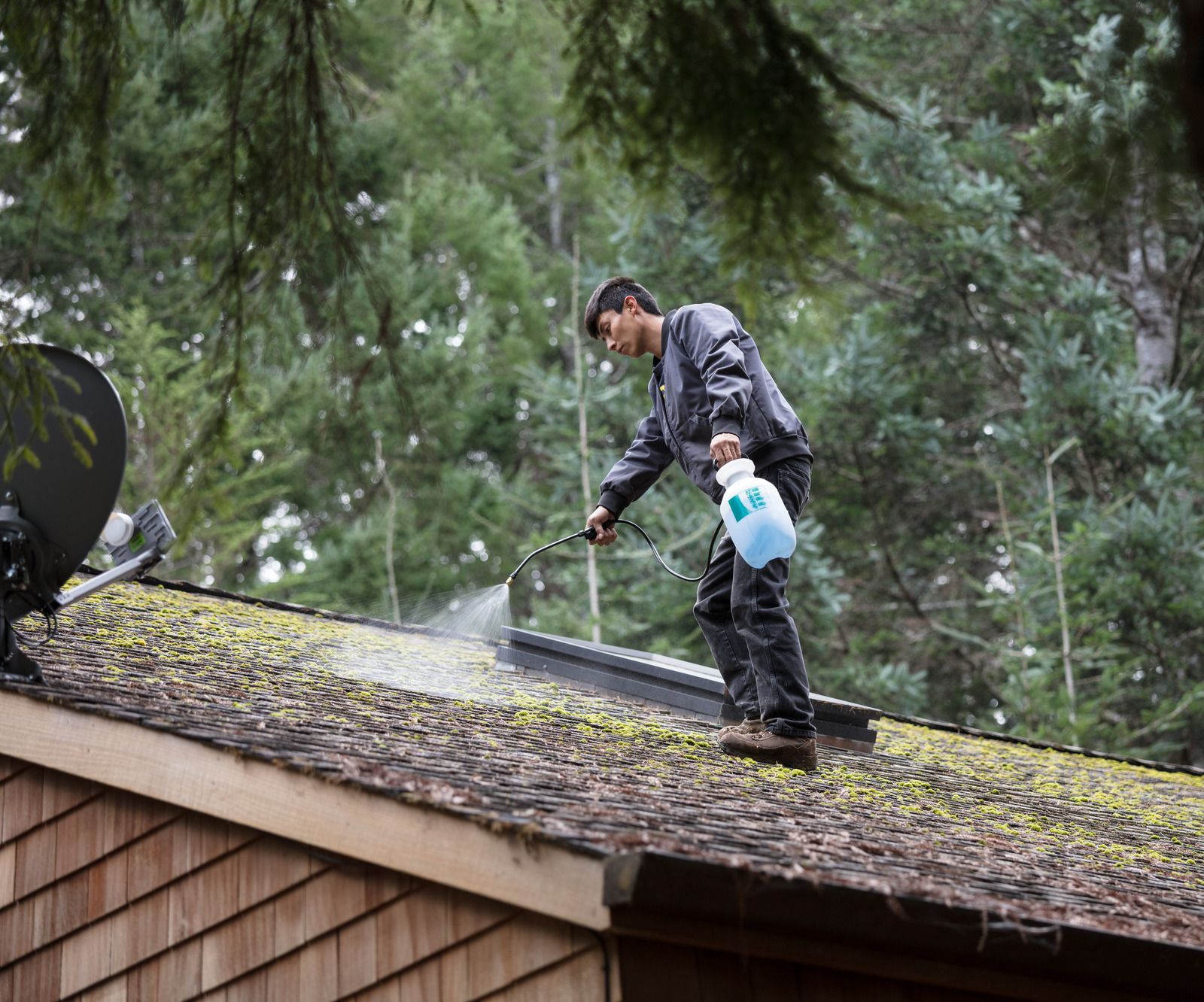
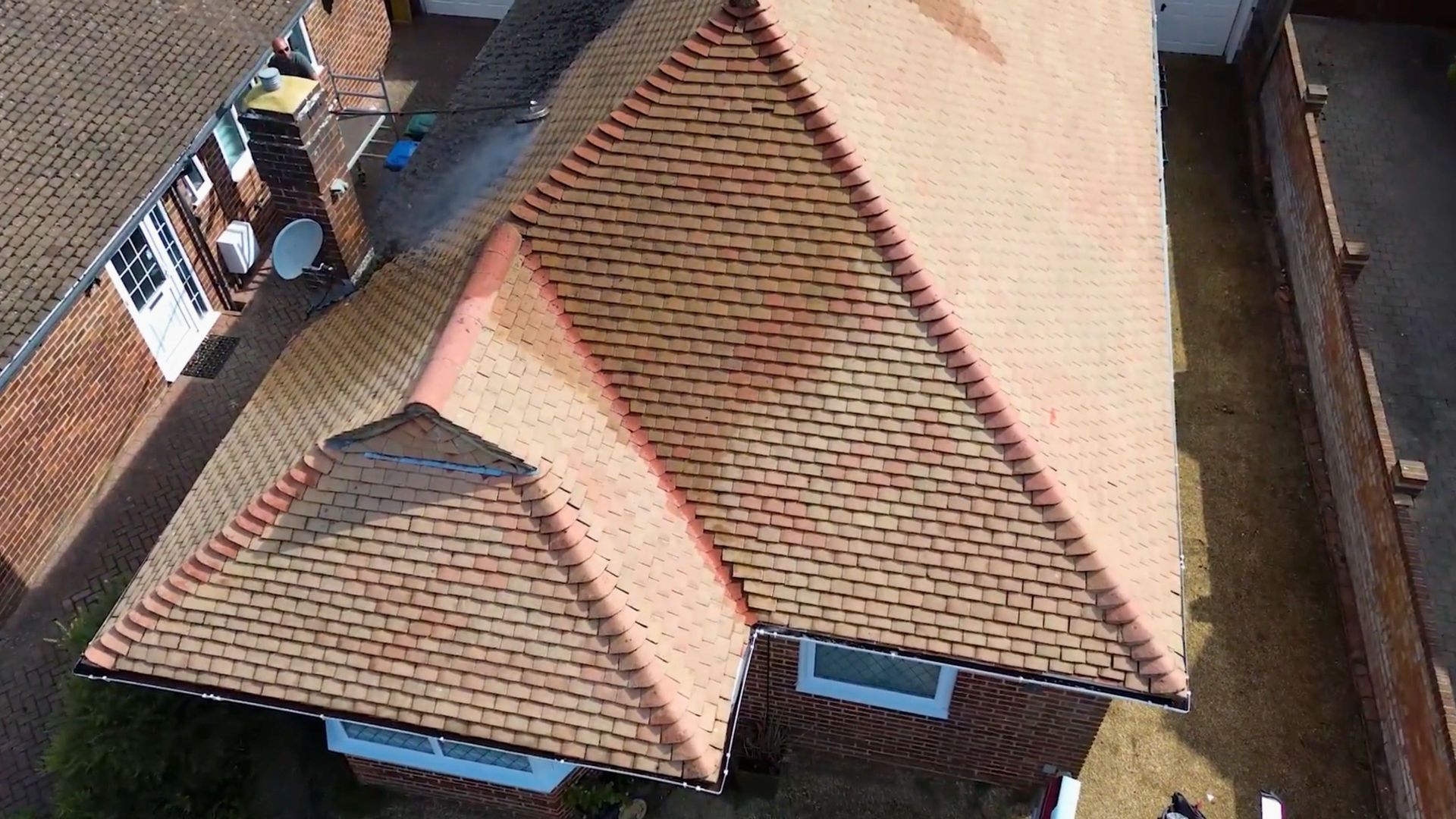
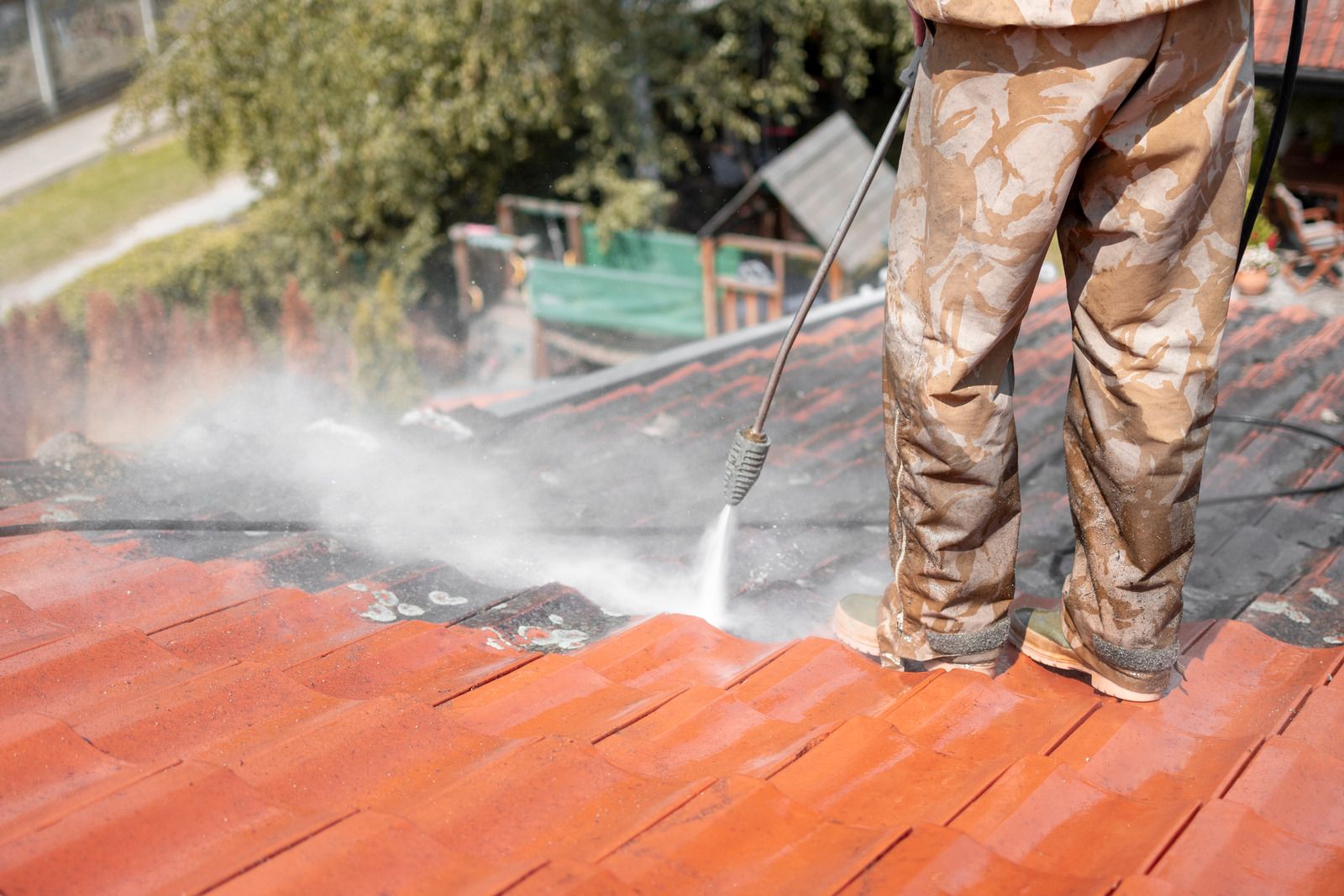
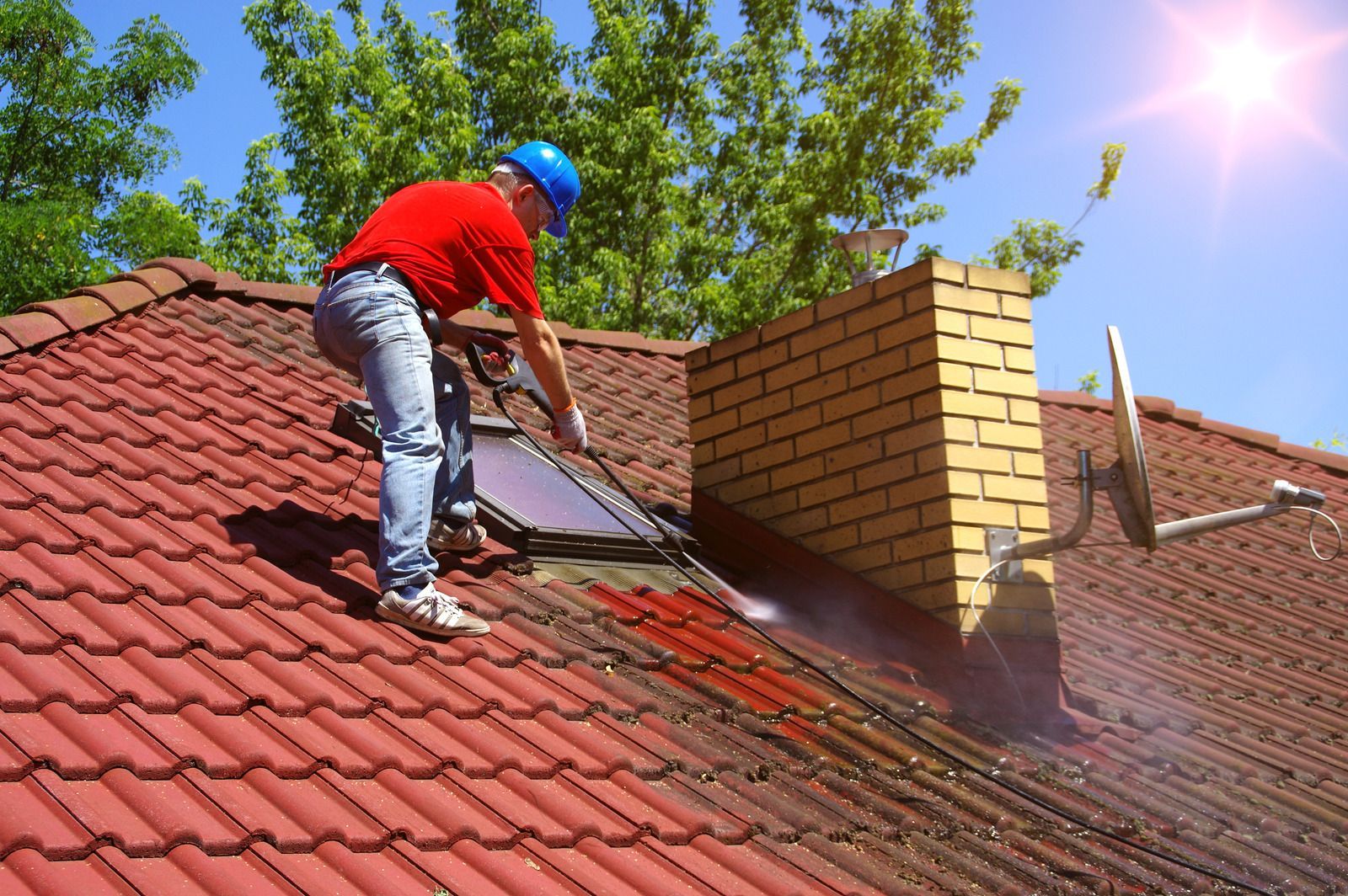
Whatever the roof, gentle, low-pressure soft washing is the safe method. It uses cleaning solutions to break down moss, algae, and lichen at the source and clears the growth away without stressing the tiles. High-pressure washing, by contrast, can crack tiles, strip their protective surface, loosen mortar, and force water underneath, causing the very damage a clean is meant to prevent.
This is true of delicate period roofs and robust modern ones alike. A good roof cleaner assesses the roof first and matches the method to the tiles, reaching for the gentlest approach that does the job, which on almost every domestic roof is soft washing.
5. Roofs and Gutters Go Together
Roof cleaning and gutter clearing are closely linked. As moss on a roof thickens and dries, it sheds into the gutters, which then block and overflow, sending water down the walls to cause damp and rot the timber behind. Clearing a gutter beneath a moss-covered roof only works for a while, because it fills again from above.
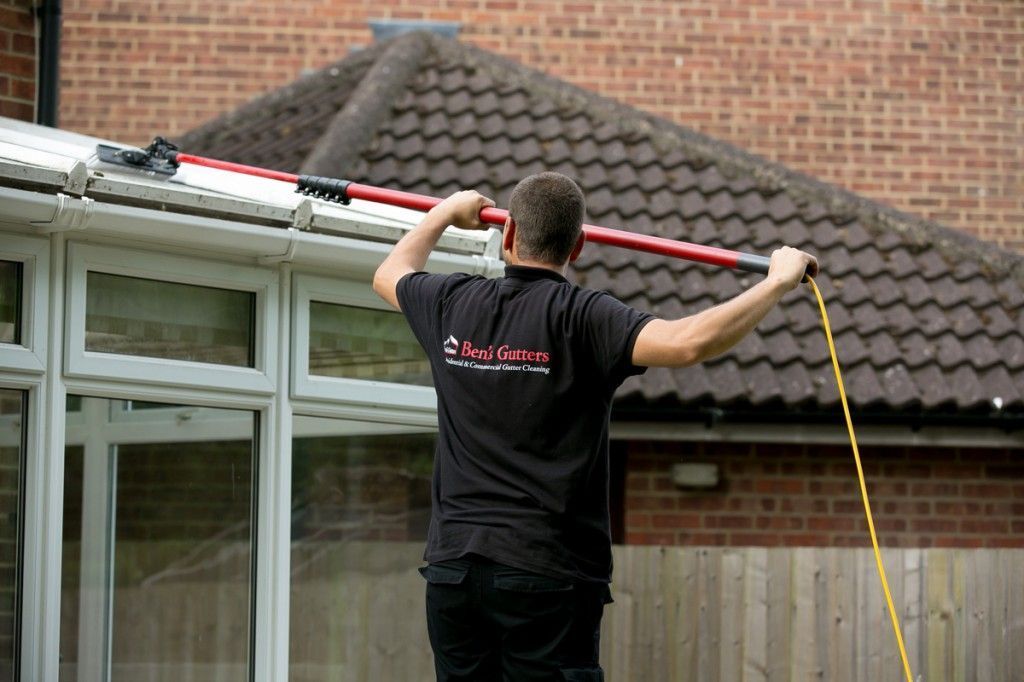
This is why dealing with both together is so effective. Removing the moss that feeds the gutters, at the same time as clearing them, keeps the whole system clear for far longer and protects the home from overflow-related damp, which is especially worth avoiding on older Essex properties.
6. Signs Your Essex Roof Needs Cleaning
A few clear signs suggest a roof anywhere in Essex is due for attention:
- Thick moss on the shaded slope , especially north-facing or under trees.
- Dark streaks or crusty lichen spreading across the tiles.
- Moss clumps in the gutters or on the ground below.
- Gutters overflowing in heavy rain.
- Slipped or cracked tiles , which matter more near the windy coast.
7. Keeping an Essex Roof Clear for the Long Term
The most reliable approach is regular, gentle maintenance rather than waiting for a problem. The county's dry climate means this can often be done less frequently than in a wetter region, but shaded slopes, coastal salt, and aged tiles all mean no roof is exempt. A gentle clean when moss starts to build, with an eye on the gutters, keeps a roof clear and sound.
Cared for this way, an Essex roof, wherever it is in the county and whatever its age, stays watertight, free of moss, and looking its best for years. Prevention through routine care is always cheaper and easier than the repairs that neglect brings.
Frequently Asked Questions
Why do Essex roofs grow moss if it is a dry county?
Dryness slows moss but does not stop it. Shade from trees and north-facing slopes keeps surfaces damp long enough for moss to establish, aged tiles give it somewhere to grip, and near the coast salt keeps surfaces wet.
Does living near the Essex coast affect my roof?
Yes. Salt carried on the sea air holds moisture against tiles and mortar, accelerating weathering, and stronger coastal winds work at edges and ridges, so coastal roofs weather a little faster than sheltered inland ones.
Is soft washing safe for all Essex roofs?
Yes. Gentle, low-pressure soft washing suits delicate period slate and clay as well as robust modern concrete tiles, removing moss and algae without the force that high pressure uses to damage tiles.
How often should I clean my roof in Essex?
It varies with shade, coast, and tile age, but many homes benefit from a check every one to three years. The county's dry climate means it can often be done less often than in a wetter region.
Should I clean the roof and gutters together?
Often, yes. Moss shed from the roof is a major source of gutter blockages, so cleaning both together keeps the whole system clear for longer and prevents overflow-related damp.
Roof going green anywhere in Essex?
Ben's Roof Cleaning provides gentle, professional roof cleaning, moss removal, and gutter clearing right across Essex, with over 15 years of experience. Get in touch or call 0120 635 5603
for a free, no-obligation quote.
Roof Care That Suits the Whole County
From the estuary towns to the rural villages and the commuter suburbs, Essex roofs share the same core needs: gentle, low-pressure cleaning matched to the tiles, an eye on the shaded slopes and the gutters, and a little more attention near the salty coast. The county's dry climate makes roof care easier than in wetter regions, but shade, trees, salt, and aged tiles all mean moss still establishes in time. Keep on top of it gently and regularly, and an Essex roof stays clear, watertight, and sound wherever in the county it stands.