Coastal and Inland Essex: How Location Shapes Roof Care
Essex is unusual in how varied its geography is. Within a single county you have a long, indented coastline of estuary towns and seaside resorts, and, only a short way inland, sheltered villages, farmland, and wooded countryside. That variety means a roof in one part of Essex can face quite different challenges from a roof in another, and the right care reflects where a home sits. This detailed guide explains how coastal and inland locations shape roof care across Essex, and what it means for keeping your particular roof clear and sound.
The quick answer: Coastal Essex roofs, near Southend, Clacton, Maldon, and the estuaries, face salt-laden air and stronger winds that accelerate weathering and drive rain at awkward angles. Inland roofs deal more with shade from trees and the damp of sheltered, wooded settings. Both grow moss and both suit gentle cleaning, but knowing your location helps target the right care.
1. Two Very Different Settings
Essex packs a remarkable range of environments into one county. The coast, from the Thames estuary at Southend round to Clacton, Frinton, Mersea, and the tidal creeks near Maldon, puts many homes within reach of salt air and sea wind. Move inland, though, and the picture changes to sheltered villages, mature trees, and the damp, wooded conditions of the countryside.
Because a roof weathers according to what it faces, these two settings shape roof care in different ways. Understanding which applies to your home, or where it sits between the two, helps make sense of how your roof behaves and what it needs.

2. The Coastal Challenge: Salt and Wind
Homes along the Essex coast face the sea's particular pressures. Salt carried on the air settles on the tiles and, because it holds moisture, keeps surfaces damp for longer after rain, accelerating the weathering of tile surfaces and mortar. Stronger coastal winds add to this, working at the edges and ridges of a roof and driving rain against it from angles a sheltered roof rarely sees.
The result is that coastal roofs can show their age a little sooner, and slipped or loose tiles matter more, because wind-driven rain finds any gap readily. Salt-held damp also encourages moss and algae, so even a sunny seaside slope can green up on its shaded side.
3. The Inland Challenge: Shade and Damp
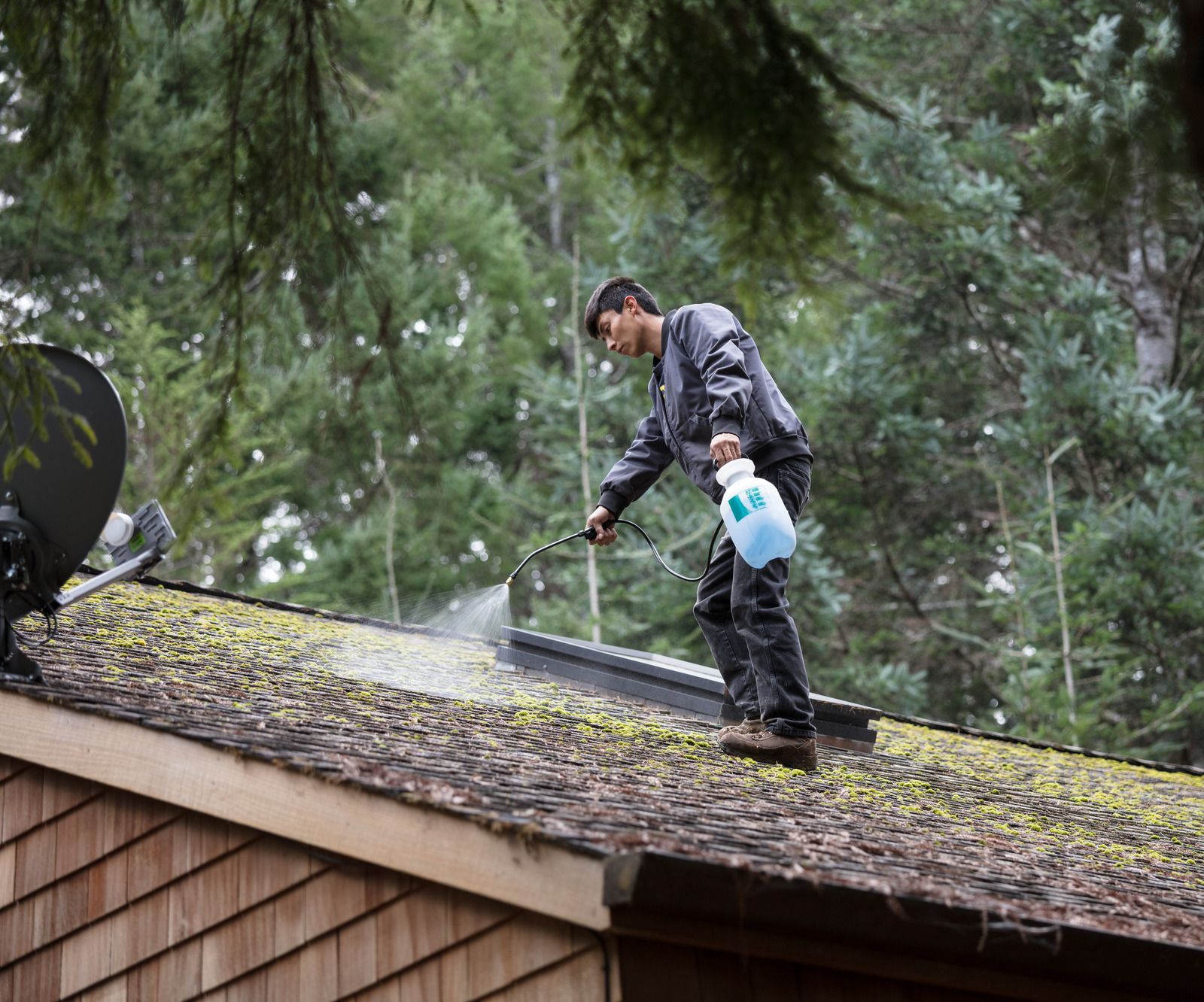
Inland Essex presents a different picture. Here the main drivers of moss are shade and the damp of sheltered, wooded settings. Village homes and rural cottages often sit close to mature trees and hedges that cast shade, stop roofs drying out, and drop leaves and debris that hold moisture and feed growth.
Away from the drying effect of coastal wind, an inland roof in a shaded, tree-close spot can hold damp for long periods, and its north-facing slopes can grow heavy moss. The county's overall dryness helps, but a sheltered inland microclimate can still be surprisingly moss-friendly.

4. What Both Have in Common
For all their differences, coastal and inland Essex roofs share the same fundamentals. Both grow moss, algae, and lichen given the right conditions, both are best cleaned gently with low pressure matched to the tiles, and both suffer if harsh, high-pressure methods are used. And on both, the roof and gutters are linked, since moss sheds into the gutters wherever a home sits.
The difference is one of emphasis. A coastal roof needs an eye on salt, wind, and slipped tiles; an inland one on shade, trees, and damp. The core of good care, gentle regular cleaning, is the same across the county.
5. Tailoring Care to Your Location
Knowing where your home sits helps target its care. A few pointers by location:
- Near the coast : watch for slipped tiles and worn mortar after windy spells, and expect salt to keep surfaces damp.
- In a sheltered village : keep an eye on shaded, north-facing slopes and trim back overhanging trees.
- Under mature trees , coastal or inland: expect faster moss and more debris in the gutters.
- On an exposed inland ridge : wind may be more of a factor than shade.
- Anywhere : clear the gutters alongside the roof to break the moss-and-blockage cycle.
6. Local Knowledge Across the County
A roof cleaner who knows Essex understands how varied it is, and can read a roof in the context of where it sits. That means recognising the salt-and-wind wear of a coastal home and the shade-and-damp moss of an inland village, and matching the method and the advice to each.
Wherever a home is in the county, the goal is the same: gentle cleaning that removes moss and growth without harming the tiles, timed and targeted to suit the local conditions. That location-aware care is what keeps Essex roofs, coastal and inland alike, clear and sound.
Frequently Asked Questions
Do coastal Essex roofs need different care?
They face salt-laden air and stronger winds that accelerate weathering and drive rain at awkward angles, so slipped tiles and worn mortar matter more. The gentle cleaning method is the same, but with an eye on salt and wind.
Why do inland Essex roofs grow moss?
Shade from mature trees and the damp of sheltered, wooded villages keep roofs from drying out, and north-facing slopes hold moisture long enough for heavy moss, even in a dry county.
Does salt really affect coastal roofs?
Yes. Salt holds moisture against tiles and mortar, keeping surfaces damp for longer and accelerating weathering, and it encourages moss and algae on shaded slopes near the coast.
Is the cleaning method different by location?
No. Gentle, low-pressure soft washing suits both coastal and inland roofs. What changes is the emphasis, watching for salt and wind on the coast, shade and damp inland.
How do I know what my roof needs?
A professional who knows Essex can read your roof in the context of its location, coastal or inland, exposed or sheltered, and recommend the right care and timing.
Coastal or inland, we cover all of Essex.
Ben's Roof Cleaning provides gentle, professional roof cleaning, moss removal, and gutter clearing across coastal and inland Essex, with over 15 years of experience. Get in touch or call 0120 635 5603
for a free, no-obligation quote.
Location Shapes the Care, Not the Principle
Essex asks different things of its roofs depending on where they stand. By the coast, salt and wind accelerate wear and make slipped tiles a real concern; inland, shade and damp from trees and sheltered settings drive moss. But the principle of good care does not change: gentle, low-pressure cleaning matched to the tiles, with the gutters dealt with alongside. Understand where your home sits in the county's varied geography, and you can keep its roof clear and sound, whether it faces the sea breeze or the shade of an inland village.